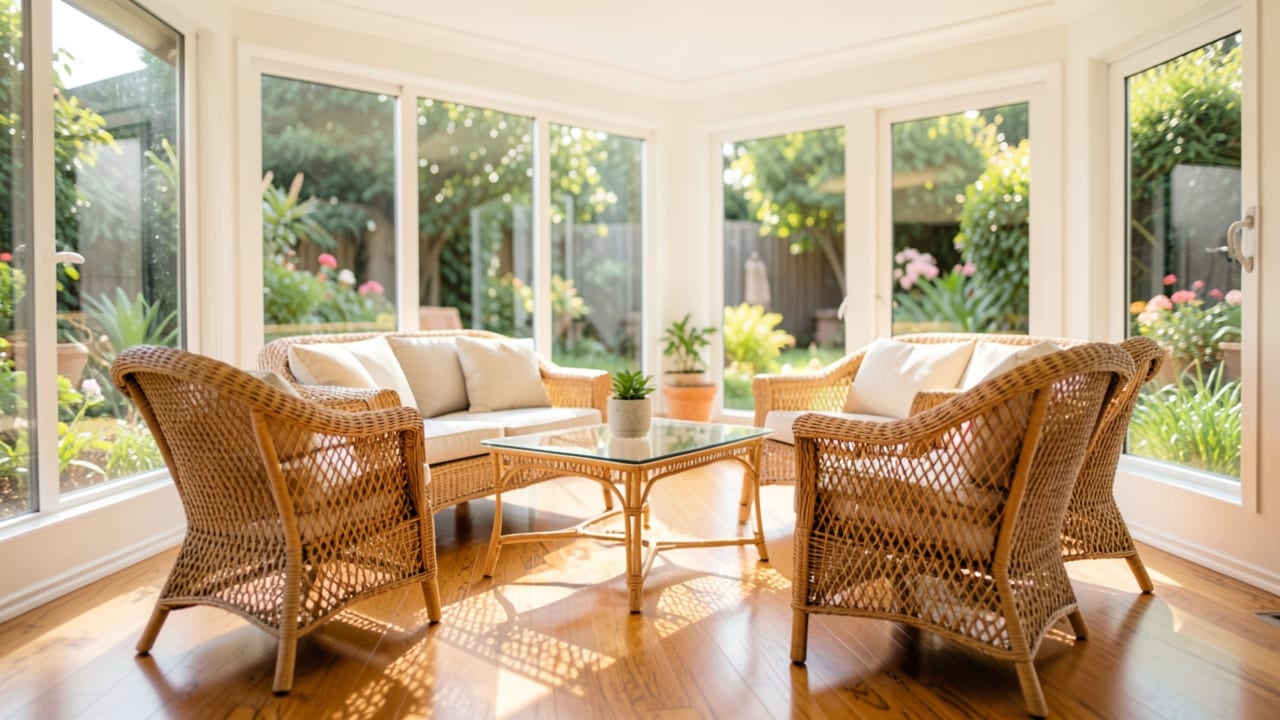
Sunroom Mold Remediation
Professional removal and treatment of mold in sunrooms to restore a safe, clean space.
Sunroom mold remediation in Ardmore, OK, targets mold growth caused by moisture in enclosed spaces like sunrooms, where poor ventilation and humidity create ideal conditions for spores. The process involves containment, removal, drying, and clearance testing to ensure the area is safe and mold-free before use.
Proper remediation prevents regrowth and protects your home’s air quality.
We also handle Pet Urine Mold Treatment and Pest Infestation Mold Remediation for Ardmore properties.
When sunroom mold remediation is needed
Mold in sunrooms often starts small but spreads quickly due to limited airflow and trapped moisture. Recognizing when a problem requires professional remediation—rather than a DIY wipe-down—can save time and prevent hidden damage.
Visible mold covering more than a small patch (typically over 25 square feet) is a clear sign, as is mold that keeps returning after cleaning. A musty odor with no visible growth may indicate hidden mold behind walls or under flooring.
Sunrooms with poor ventilation, leaks, or condensation issues are high-risk areas. If mold appears in the same spot repeatedly, the moisture source likely hasn’t been addressed.
Professional remediation includes fixing the underlying cause, not just removing visible spores. Ignoring these signs can lead to structural damage and health concerns over time.
Signs You Need Professional Sunroom Mold Remediation
- Mold covers more than 25 square feet in a single area (Texas state threshold for professional work).
- Mold keeps returning to the same spot after cleaning, suggesting an unresolved moisture issue.
- A musty smell persists even when no visible mold is present—hidden growth may be present.
- Mold appears in multiple locations or spreads quickly, indicating poor containment or ventilation.
What affects cost and timeline
The cost and duration of sunroom mold remediation depend on the size of the affected area, the type of mold, and whether hidden growth or moisture sources are discovered during the process. Black mold remediation typically costs more due to stricter handling requirements.
Containment, removal, drying, and clearance testing are all part of the process, and each step adds time and expense if complications arise.
Remediation also varies based on the materials involved. Porous materials like drywall or carpet padding are often removed and replaced, while non-porous surfaces like tile or metal framing can be cleaned and treated.
Structural drying with dehumidifiers and air movers ensures the area stays dry to prevent regrowth, which may extend the timeline if humidity levels are high.
What to watch for during remediation
During professional sunroom mold remediation, containment is critical to prevent spores from spreading to other parts of your home. Plastic sheeting and negative-air machines seal off the work area, while HEPA-filtered air scrubbers run continuously to capture airborne spores.
Non-HEPA equipment can recirculate spores, making the problem worse. Always ask if the crew uses HEPA vacuums and air scrubbers—this step helps ensure the job is done safely.
Post-remediation clearance testing is another key step. An independent lab test confirms spore counts are back to normal before the containment is removed. Without this test, there’s no way to verify whether the mold has been fully addressed.
Skipping testing or containment can lead to hidden regrowth and additional work down the line.
Signing a contract without a written scope of work, paying in full before any work starts, or accepting a bid that skips containment or clearance testing can lead to incomplete remediation. Always compare bids based on included services, not just price.
How sunroom mold remediation works
Professional remediation follows a structured process to safely remove mold and prevent regrowth.
- 1Containment Setup
Plastic sheeting and negative-air machines seal the sunroom off from the rest of the home. This keeps spores generated during removal from spreading to unaffected areas.
- 2Mold Removal
Porous materials like drywall or carpet padding are cut out and bagged, while non-porous surfaces like tile or metal are scrubbed and treated with antimicrobial solutions.
- 3HEPA Filtration and Cleanup
HEPA-filtered air scrubbers run continuously, and surfaces are vacuumed with HEPA equipment to capture spores. Standard vacuums or non-HEPA filters can release spores back into the air.
- 4Structural Drying
Industrial dehumidifiers and air movers reduce moisture levels in framing and subflooring to prevent mold regrowth. Proper drying ensures the area stays dry long-term.
- 5Clearance Testing
An independent lab tests air or surface samples to confirm spore counts are back to normal before containment is removed. This step verifies the remediation was effective.
Frequently asked questions
How do I know if my sunroom mold is black mold, and does that change the cost?
Black mold appears dark green or black and often has a slimy texture. It requires stricter handling, including protective gear for the crew, which can increase costs by 15–25% for the same treated area. Always ask for confirmation of the mold type before work begins.
Will my sunroom stay closed off for days during remediation?
Containment typically lasts 1–3 days, depending on the size and severity of the mold. The crew will coordinate with you to minimize disruption, but the sunroom will need to remain sealed during this time to prevent spore spread.
What should I do if mold keeps coming back after remediation?
Recurring mold usually means the moisture source wasn’t fixed. Check for leaks, poor ventilation, or high humidity in the sunroom. A professional can help identify and address the underlying issue to prevent future growth.
Do I need to leave the house during sunroom mold remediation?
You don’t need to leave, but the crew may ask you to stay out of the sunroom and adjacent areas for safety. They’ll provide guidance based on the containment setup and airflow during the process.
Where Ardmore sits, and what the Census lists nearby
Ardmore sits in Oklahoma, and the closest places listed in the U.S. Census Gazetteer are Springer (6.9 miles north), Lone Grove (7 miles west), Dickson (7.6 miles east), Gene Autry (9.6 miles northeast). Within 25 miles of Ardmore the same source lists 20 distinct incorporated places and census-designated places.
Those figures matter for sunroom mold remediation because they are straight-line distances between Census coordinate points: road mileage between Ardmore and Springer runs longer than the 6.9 miles shown, which is why quotes for the same job differ between towns that look close together on a map.
Source: U.S. Census Bureau Gazetteer.
See Oakland, OK for more, or find out about our complete Ardmore service list by neighborhood for our complete lineup.
Ready to get started?
Talk to a local mold remediation pro in Ardmore — get a written quote.
Other Mold Remediation Services in Ardmore
Pet Urine Mold Treatment in Ardmore, OK
Professional removal of mold caused by pet urine in homes, including assessment and treatment.
Learn More
Pest Infestation Mold Remediation in Ardmore, OK
Professional mold removal and remediation for pest-related infestations in homes.
Learn More
Pre-Winter Mold Prevention in Ardmore, OK
Pre-winter mold prevention involves inspection and treatment to stop mold growth before cold weather.
Learn More
Move-In Mold Assessment in Ardmore, OK
Professional inspection and assessment of mold presence before moving into a property.
Learn More
Post-Remediation Sealing in Ardmore, OK
Applying protective sealants to surfaces after mold remediation to prevent future growth.
Learn More
Mold Inspection in Ardmore, OK
Mold inspection in Ardmore, OK — a visual and moisture-meter assessment that finds the source of growth, not just the visible spot on the wall.
Learn MoreCommon Questions About Mold Remediation in Ardmore
Everything you need to know about mold remediation services in Ardmore
How much does Sunroom Mold Remediation typically cost in Ardmore, OK?
Why does Ardmore, OK's humidity make mold a bigger risk than in drier regions?
Can small mold problems be handled without hiring anyone?
What's the actual difference between mold removal and mold remediation?
Is a final clearance test part of a typical mold remediation job?
How does mold remediation actually prevent the problem from coming back?
Need Mold Remediation in Ardmore?
Connect with local providers in Ardmore for a detailed quote.
⏰ We answer your call • Serving all of Ardmore and surrounding areas